 Media OutReach Newswire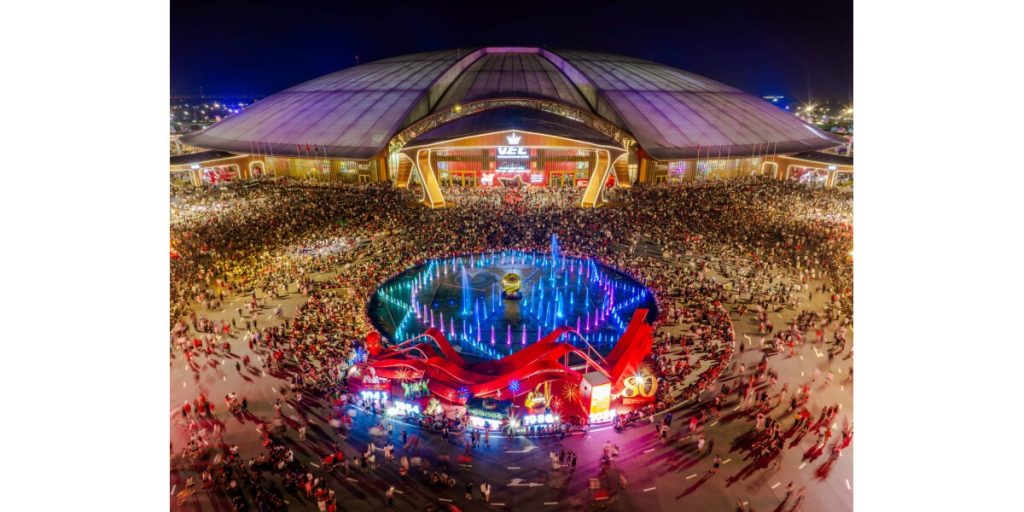
The convergence of progressive policies and large-scale infrastructure developed by Vingroup is positioning Vietnam as a rising hub for the global events and experience economy.
HANOI, VIETNAM – Media OutReach Newswire – 28 May 2026 – Across the Asia-Pacific region, the experience economy is undergoing a major shift. In many established destinations, rising venue and accommodation costs are forcing 73% of event organizers to tighten budgets, according to Mordor Intelligence. At the same time, political uncertainties in several markets are prompting international investors to take a more cautious approach toward long-term commitments.

Against this backdrop, Vietnam is increasingly drawing attention as a new destination for global exhibitions, live entertainment, and large-scale experiential events. Political stability, sustained economic growth, a young population with rising spending power, and coordinated efforts from both the government and the private sector are contributing to the country’s growing appeal.
This is “a golden opportunity” for Vietnam’s cultural industries, said Dr. Cấn Văn Lực, Chief Economist at BIDV, during the 2026 Exhibition, Event and Advertising Summit held at the Vietnam Exposition Center (VEC) on May 8.
According to Dr. Lực, Vietnam has maintained an average annual growth rate of 6.4% over four decades of the Doi Moi economic reform without experiencing a major economic crisis. Per capita income has now surpassed USD 5,000 and is projected to reach USD 8,500 by 2030, fueling demand for entertainment, sports, and live events.
Vietnam’s growing profile is also reflected in its position among the world’s Top 20 trading economies, Top 15 destinations for foreign direct investment, and its 29-place rise in the Index of Economic Freedom. These macroeconomic advantages are increasingly translating into tangible momentum for the country’s event industry.
Vietnam’s MICE sector is currently valued at approximately USD 6 billion, while the advertising market has reached USD 3.5 billion. The live entertainment industry alone has generated more than USD 50 million in revenue, supported by over 700 large-scale events annually and more than USD 1 billion in economic spillover from international visitors, according to data presented at the summit.
Much of this momentum is being driven by parallel advances in policy reform and infrastructure development.
Policy Reforms Open New Opportunities
As Vietnam enters a new phase of development, culture is increasingly being positioned as a strategic growth driver.
“Culture is not only the spiritual foundation of society, but is increasingly becoming an intrinsic resource, a development driver, and a source of national soft power,” Minister of Culture, Sports and Tourism Lâm Thị Phương Thanh said at the summit.
Earlier this year, the Politburo issued Resolution No. 80 on the development of Vietnamese culture, setting targets for cultural industries to contribute 7% of GDP by 2030 and 9% by 2045. The National Assembly also passed Resolution No. 28/2026/QH16, widely viewed as a significant step toward easing restrictions in the cultural, exhibition, and performance sectors by reducing barriers related to taxation, land access, and administrative procedures.
Key measures include a commitment to allocate at least 2% of the annual state budget to culture, establish a cultural venture investment fund, reduce VAT to 5%, and introduce tax incentives for exhibitions, performances, and sports-related activities. Policies encouraging the development of creative complexes with dedicated land and infrastructure incentives are also expected to accelerate industry growth.
If policy reforms are laying the groundwork, infrastructure is becoming the decisive factor in Vietnam’s ability to compete for international mega-events.
“You cannot attract ministers, government representatives, or the world’s 5,000 largest corporations by chance. They come because of deliberate planning and infrastructure development,” said Geoff Dickinson, CEO of dmg events, one of the world’s leading energy event organizers.
Infrastructure Scales Up
The rapid development of Vietnam’s event industry is increasingly being shaped by major private-sector investments.
Among the most prominent projects is the Vietnam Exposition Center (VEC) in Hanoi, developed by Vingroup. Covering 900,000 square meters, VEC has been positioned as one of Southeast Asia’s largest all-in-one exposition and event complexes.
Vingroup’s world-class organization and operational excellence have already been proven through legendary mega-events, most notably bringing G-Dragon’s “Übermensch” World Tour to Vietnam under the 8Wonder brand. Leveraging this proven expertise, VEC is designed to seamlessly execute the next generation of large-scale activations. Looking ahead, this operational blueprint will further expand across the Vingroup ecosystem, notably with the upcoming VEC Can Gio project in Ho Chi Minh City, the Blue Wave Theater—a 60,000-capacity venue set to become the largest in Southeast Asia.

Jason Yan, Partner at M Square Capital, the investment fund behind the Ultra Worldwide EDM festival franchise, said VEC’s physical infrastructure and operational model meet the requirements for hosting global-scale productions.
“We are no longer only looking at festival organization. Success in this industry also depends on artist management and venue operations. Vingroup has clearly invested in building those capabilities,” he said.
Further ahead, the group is investing in mega-projects designed to elevate Vietnam’s position in the global event infrastructure landscape. These include the planned Hùng Vương Stadium, expected to open in 2028 with a capacity of 135,000 seats and designed to meet FIFA and international entertainment standards.
Another project, the 60,000-seat PVF Stadium, will feature a PTFE retractable roof capable of opening and closing within 12 to 20 minutes, addressing weather-related challenges for outdoor concerts and sporting events.
Beyond venue development, Vingroup has also assembled a broader ecosystem supporting the event industry.
Green SM operates more than 186,000 electric taxis and motorbikes across 34 provinces and four countries, helping support transportation and logistics for large-scale events and international delegations.
Vinpearl provides more than 16,100 hotel rooms and villas across major tourism and economic centers, alongside golf courses and VinWonders entertainment complexes, contributing integrated hospitality capacity for large events.
The ecosystem is further complemented by V-Spirit, an international event organizer; V-Culture Talent, a talent development organization; and VinPalace, a network of convention and culinary centers.
Together, policy reforms, private capital, and large-scale infrastructure investments are creating conditions that could significantly reshape Vietnam’s role in the global events industry.
“We believe this is Vietnam’s moment,” Dickinson said. “The combination of national ambition and world-class infrastructure has the potential to transform the country into a major destination for global events.”
Hashtag: #VEC
The issuer is solely responsible for the content of this announcement.
About the Vietnam Exposition Center (VEC)
The Vietnam Exposition Center (VEC) is Southeast Asia’s largest exhibition complex, covering more than 90 hectares. As a destination for major national and international events, VEC pursues the mission of “Bring Vietnam to the world and bring the world to Vietnam,” serving as a gateway where global excellence converges and Vietnamese identity reaches audiences worldwide, while contributing to the growth of key economic sectors and strengthening Vietnam’s position on the global stage.
Website:  https://vec.global/en
Email: inquiry@vec.global

Views: 13