
 Douglas Mwiti
Kenyan delegation pose for a group photo during a visit to the Municipality of Kincardine, host community of Bruce Power in Canada, on the sidelines of the World Geothermal Congress 2026.
Kenya has moved closer to becoming a nuclearpower country, after Kenya Electricity Generating Company, (KenGen),accompanied by other leaders from Kenya used a high-level mission through Ontario’s nuclear industry to sharpen its case for building the nation’s first nuclear power plant.
 The week-long Canada–Kenya Nuclear Engagement Program brought Kenyan leaders into direct contact with one of the world’s most mature nuclear ecosystems, giving KenGen and partner institutions deeper exposure to the operational, regulatory, technical and human-capital foundations required for Phase 3 readiness under the IAEA milestones framework.
 KenGen Managing Director and CEO, Eng. Peter Njenga described the tour as highly successful casting the move to nuclear as the next big step in Kenya’s push for industrial growth, energy security and round-the-clock clean power.
“This trip is very strategic to us, and it has helped us deepen our understanding on our role going forward.
We had a first-hand experience to learn from an established nuclear market, understand the owner-operator model, and translate that knowledge into a long-term plan for Kenya’s energy system,” said Eng. Njenga.
 Beyond showcasing technology KenGen said the Canada mission provided an endto-end view of what it takes to build a durable national nuclear program: owneroperator capability, regulatory discipline, workforce development, fuel-cycle understanding, public accountability, and long-term waste stewardship.
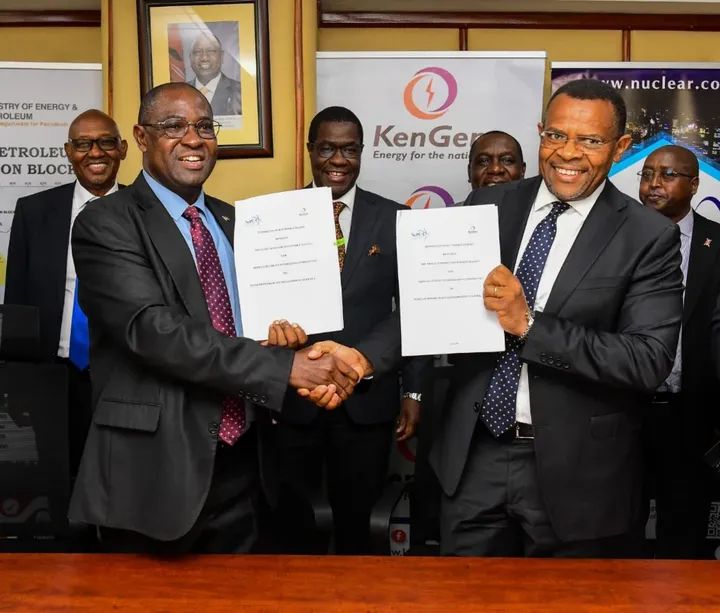
“KenGen, has been designated to serve as the owner-operator of Kenya’s first nuclear power plant in partnership with our counterparts, the Nuclear Power and Energy Agency (NuPEA).
This mission helped sharpen the practical roadmap for turning our national ambition into institutional readiness,” said the NSE-listed company CEO, Eng. Njenga.
 At the same time,KenGen said that the Kenya’s nuclear vision is anchored in a broader national growth strategy.In December 2025,KenGen announced that the country’s first nuclear development is expected to be approximately 2,000MW,with longer-term plans to expand to roughly 6,000MW of nuclear capacity as part of Kenya’s wider push to add 10,000MW of electricity and strengthen energy security,industrial competitiveness and long-term economic transformation.
 In Ontario, the Kenyan delegation engaged a nuclear ecosystem built on proven scale and continuity. During the tour the Kenyan delegation was exposed to Canada’s reactor technology, CANDU (Canada Deuterium Uranium).
Canada has 16 CANDU reactors in Ontario and one Reactor in New Brunswick.The delegation also learned about Canada’s work on next-generation nuclear technologies and reactor innovation.
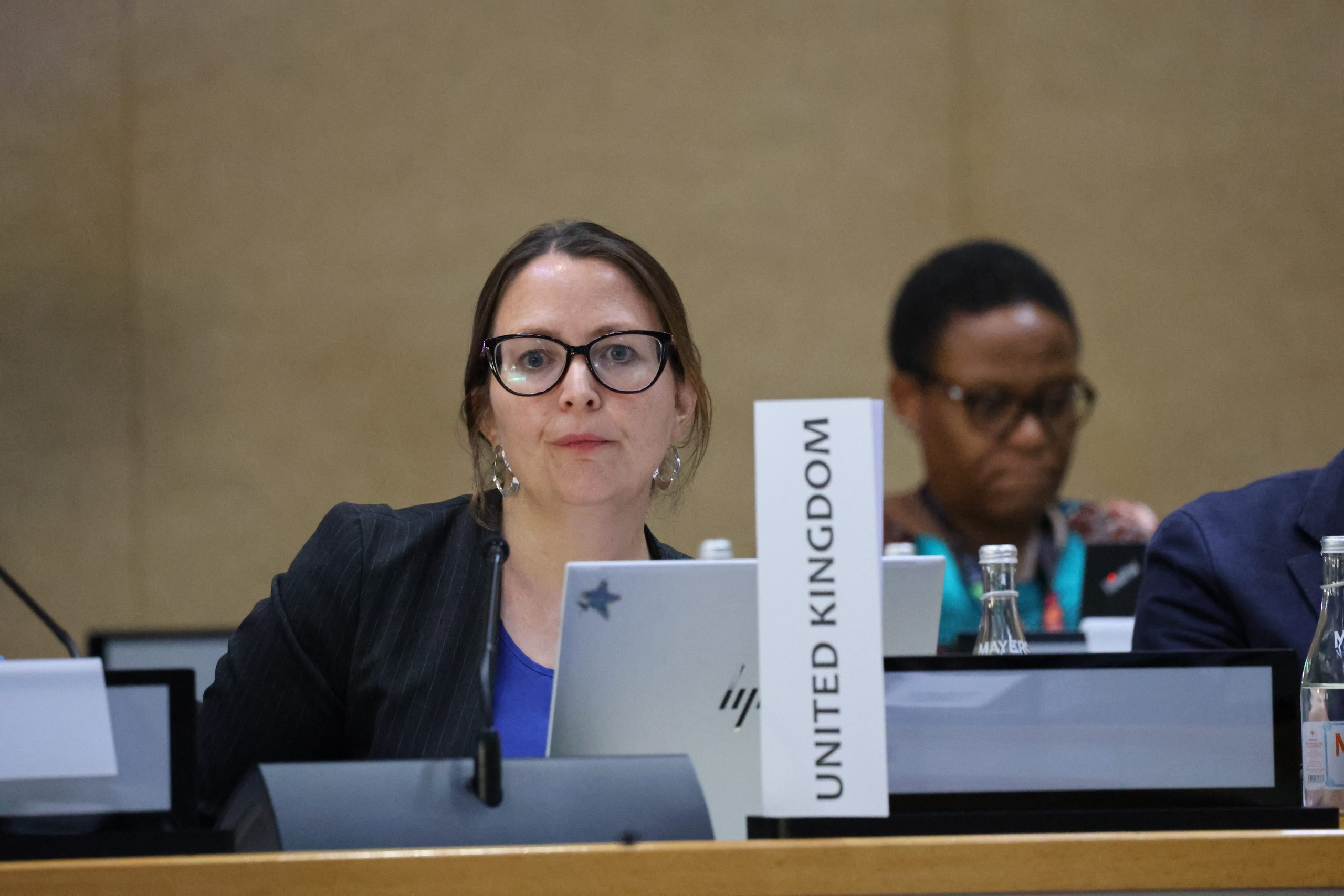
“Kenya is one of Canada’s most important partners in sub-Saharan Africa, and we see significant opportunity to deepen that partnership across energy, education and workforce development,” said Sophie Price, the Head of Cooperation at the High Commission of Canada to Kenya.
She went on to state: “Building a nuclear program is not only about technology; it is also about people, institutions and long-term capability.
For every engineer in nuclear,for example, many more diverse professionals are needed across operations, safety, regulation and community engagement, and that is why partnerships like this matter to us.”
 Already Canada has deployed 30 CANDU reactors currently operating globally.CANDU reactors use heavy water (deuterium oxide) as moderator and coolant and are among the few reactor designs in the world developed for the open commercial market by their home country.
CANDU reactors use natural uranium fuel, reducing reliance on uranium enrichment services and providing greater flexibility in fuel sourcing.
 This contributes to energy security and supply chain resilience, considerations that are increasingly important for countries pursuing long-term nuclear power programs.
For Kenya, those lessons were highly relevant.The Ontario program exposed KenGen to Canada’s full nuclear value chain, from technology stewardship and operating culture to supply-chain development, skills formation, research partnerships and long-term waste management.
At Bruce Power, the world’s largest operating nuclear power facility with an installed capacity of 6,400MW, the Kenyan delegation learned about why nuclear power is becoming increasingly strategic in modern industrial economies.
“Canada’s electricity demand could more than double by 2050 with provincial data showing a new trend of emerging consumers mostly from data centres seeking grid connection already represent roughly 30% of Ontario’s peak demand, with more than 6,500MW requested,” said Ms. Price.

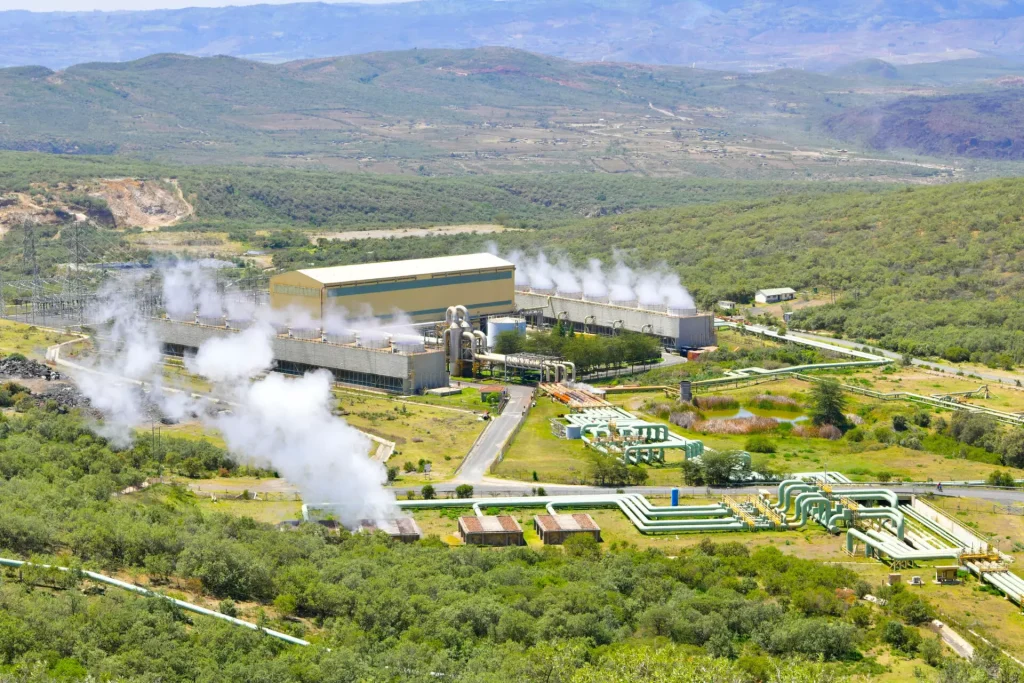
For Kenya, this is a powerful signal, and further boost to KenGen’s new Green Energy Park which seeks to meet the emerging and future needs of industrialization, digital infrastructure, advanced manufacturing and green growth through reliable, scalable baseload power.
“No nation has achieved industrial transformation without reliable, affordable, and scalable baseload power,” said Eng. Njenga, adding,“Kenya’s nuclear project must be understood as institution-building before it is understood as construction.
“Our aspiration is to build a nuclear organization that reflects the highest international standards of operational excellence, safety culture, environmental stewardship and public accountability,” he said.
 A recurring theme throughout the visit was the importance of developing local capabilities alongside nuclear infrastructure.
The delegation observed how Canada’s nuclear sector supports a broad ecosystem of manufacturers, engineering firms, educational institutions, service providers, and research organizations.
These linkages help maximize domestic economic benefits, create high-value jobs, and build national expertise that can be sustained over multiple generations of plant operation.
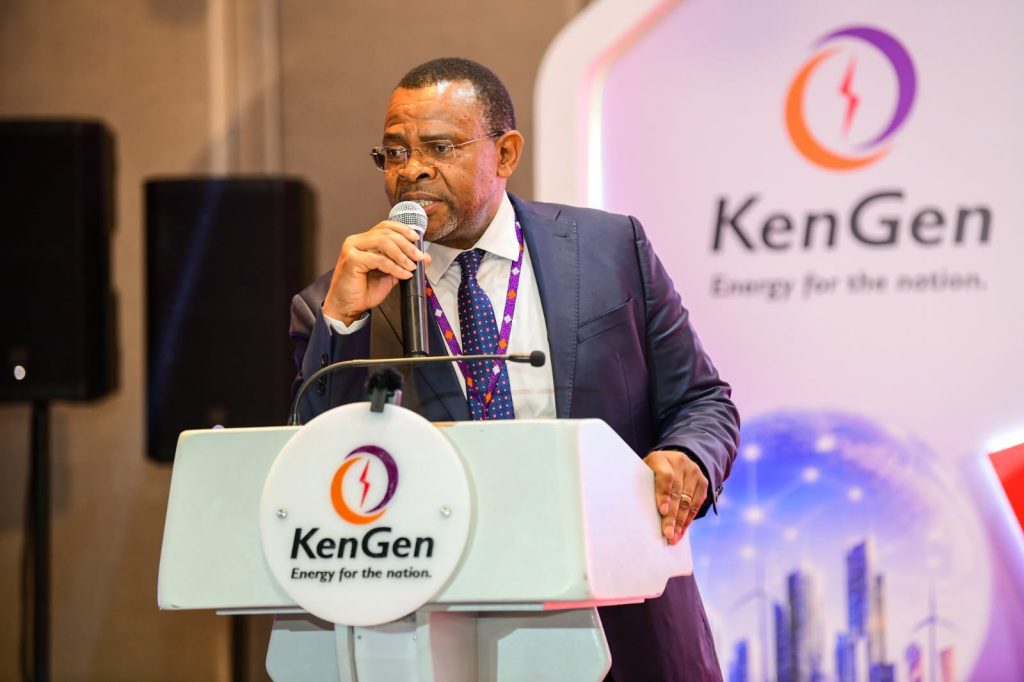
“Drawing on benchmark of Bruce Power in Kincardine,Canada where localized nuclear expansion acts as a massive driver of socioeconomic development, it is evident that a comprehensive, cross-county joint stakeholder engagement framework must be deployed to prioritize transparent, community-driven advocacy campaigns,” said Eng. Njenga.
 At the same time, the team was exposed to the ability of a nuclear power plant to stimulate regional wealth creation, generate thousands of skilled engineering and construction jobs, and catalyse sustainable industrialization not just in the nuclear power plant site but across Kenya.
“It is important therefore that we have a dedicated focus on early stakeholder alignment, public education, and infrastructure assessment to ensure that local communities directly benefit from the expected labour income, enhanced public infrastructure services, and long-term economic transformation driven by clean energy,” said Eng. Njenga.
During an exposure tour of Canada’s Nuclear Waste Management Organization (NWMO) the mission demonstrated how long-term used-fuel management can be institutionally protected through dedicated trust funds that exist for their intended purpose, ensuring safety treatment and disposal of nuclear wastes.
 “For Kenya, this level of safety preparedness offered us a concrete example of how public confidence in nuclear energy is built not only through safety and regulation,but through visible, durable commitments to stewardship over decades,” said NuPEA’s Eng. Eric Ohaga who was also part of the Kenyan delegation.
 The trip also underscored that nuclear readiness depends on people as much as infrastructure. At McMaster University, the delegation saw how specialized talent pipelines are built early, including the Bruce Power Women in Nuclear Engineering Co-op Program, which introduces students to the full nuclear fuel cycle from mining and plant operation to waste management.
 The model aligns with Kenya’s need to build an inclusive,multidisciplinary workforce in engineering, science, operations, regulation, communications, environmental management and community engagement.
 KenGen’s Canada mission sends a clear signal to the market, to policymakers and to the Kenyan public that Kenya’s nuclear future is moving from aspiration to structured readiness.
“Success therefore depends on strategic patience, consistency of purpose and trusted international partnerships,” said Eng. Njenga, adding, “Kenya’s nuclear journey, is not beginning from zero, but it will demand discipline, continuity and institutional depth to turn this national dream into a reality for the good of our people.”
 At AtkinsRéalis,the steward of CANDU technology, the delegation was shown how a reactor platform becomes part of a broader national supply chain.
Carl Marcotte of Candu Energy told the Kenyan team that, given the progress Kenya has already made in power development,nuclear represented a logical next step.
 He also stressed a point of relevance to KenGen’s industrial ambitions: while first-ofa-kind units and critical components may have to be imported at the outset, localization can deepen over time, allowing more equipment, services and technical capability to be produced domestically.
This approach can help maximize economic benefits, create skilled jobs, and strengthen national industrial capacity over the life of a nuclear program.
 That question of local capability ran through other stops on the program.The message was that nuclear power is never just a plant behind a fence.
It is an ecosystem of fabricators, engineers, training institutions, policy specialists, inspectors and long-duration service providers.
 At Canadian Nuclear Laboratories, Eric McGoey argued that public debate around nuclear power often dwells almost exclusively on risk while giving too little attention to economic value.
“People tend to focus on waste at the end of the project rather than on the wider benefits that flow from a reliable source of low-carbon baseload electricity,” he said adding,“nonetheless we can never dismiss the burden of safety or public trust, which is real but it is good to note that mature nuclear states deal with those burdens through institutions designed to manage them over decades.”
 A key takeaway from the visit is that successful nuclear programs extend well beyond the reactor itself.Canada’s experience demonstrated the importance of developing local supply chains, workforce capabilities, research partnerships, and institutional capacity alongside nuclear infrastructure.
 By learning directly from a country that has built, operated, regulated and continuously evolved a world-class nuclear system, KenGen is helping position Kenya to take the next step with greater confidence, stronger partnerships and a sharper understanding of what it will take to deliver safe,affordable, low-carbon baseload power at national scale.
Views: 23