 Paul Arithi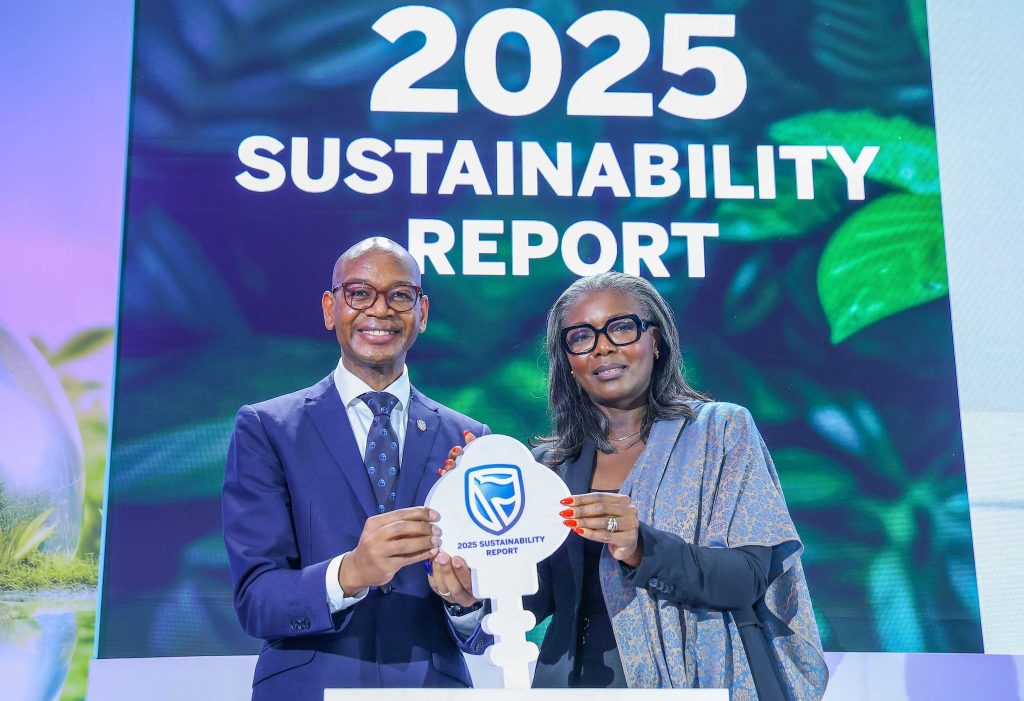
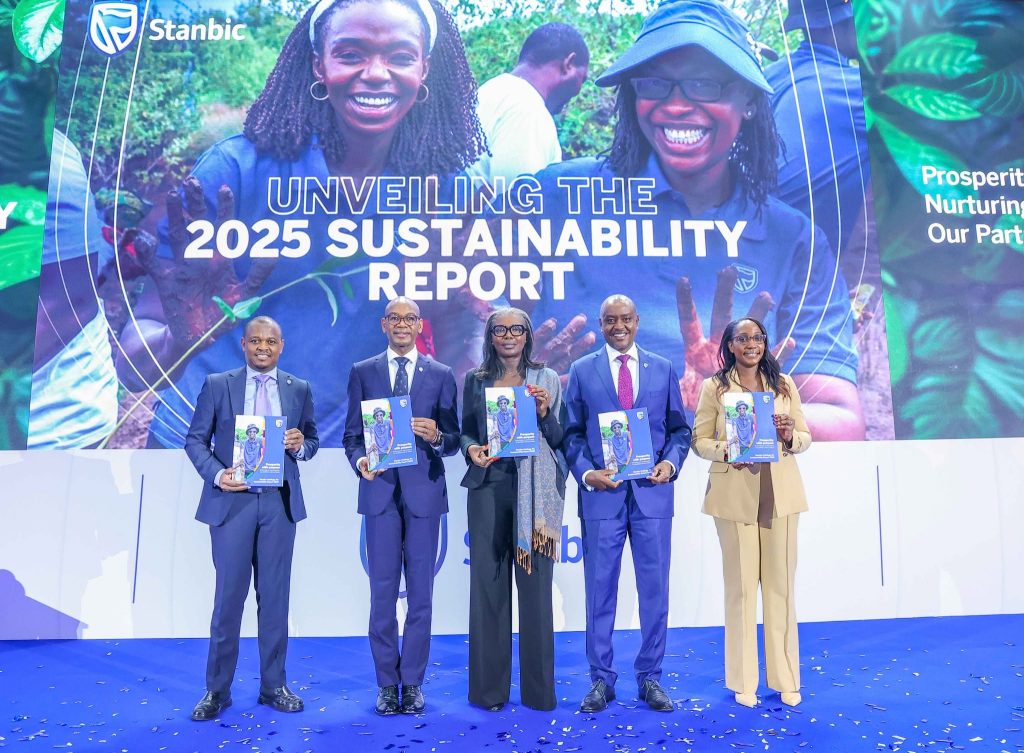
Regional Chief Executive, East Africa, Standard Bank, Dr. Joshua Oigara (Left) all with UN Women Country Representative to Kenya, Ms. Antonia N'gabala Sodonon (Right) during the unveiling of Stanbic Bank’s Sustainability Report 2025.
- KES133 billion in trade financing disbursed, surpassing a KES90 billion target
- KES4.5 billion in green building loans and KES273 million in solar financing issued
- KES49.5 billion disbursed to women through the D.A.D.A platform since inception, with 112,640 women onboarded
- KES1.8 billion disbursed to support affordable housing projects
- KES105.73 million in grants and catalytic funding extended to MSMEs in 2025
- KES2.5 billion disbursed to climate-smart agriculture, raising the agricultural loan book to 9.9%
- Planted 204,000 trees, restoring over 107 hectares of degraded land.
- Trained 126,901 women, equipping them with business, financial literacy and entrepreneurship skills to support community-level impact
Stanbic Holdings Plc facilitated KES133 billion in trade financing in 2025, exceeding its KES90 billion target as it scaled sustainable finance, enterprise support and inclusive growth across Kenya and South Sudan.
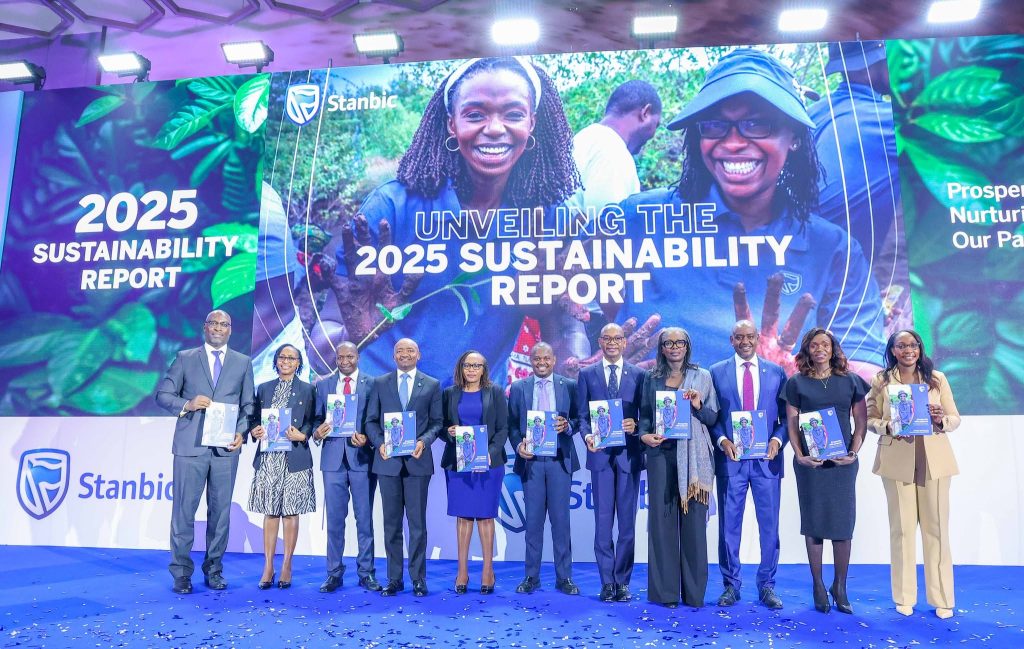 The performance is outlined in the Group’s 2025 Sustainability Report, which highlights progress in sustainable finance, climate resilience, enterprise growth, financial inclusion and responsible operations.
During the year, the Bank expanded its sustainable finance portfolio, advancing KES4.5 billion in green building loans and KES273 million in solar energy financing.
 Support for small and medium-sized enterprises remained a central pillar of the sustainability agenda. In 2025, the Bank extended KES105.73 million in grants and catalytic funding to MSMEs, helping businesses access capital, strengthen resilience and accelerate growth.
 Dr Joshua Oigara, Chief Executive, Stanbic Holdings Plc, said: “We made a deliberate strategic shift, re-orienting our portfolio toward sectors and segments that foster long-term national resilience, including green financing.
 We have embedded sustainability into the fabric of our daily decision-making, ensuring that performance is measured against clear targets and aligned to our strategic direction.”
 The Bank also deepened its contribution to addressing Kenya’s housing deficit, providing KES1.8 billion in affordable housing finance.
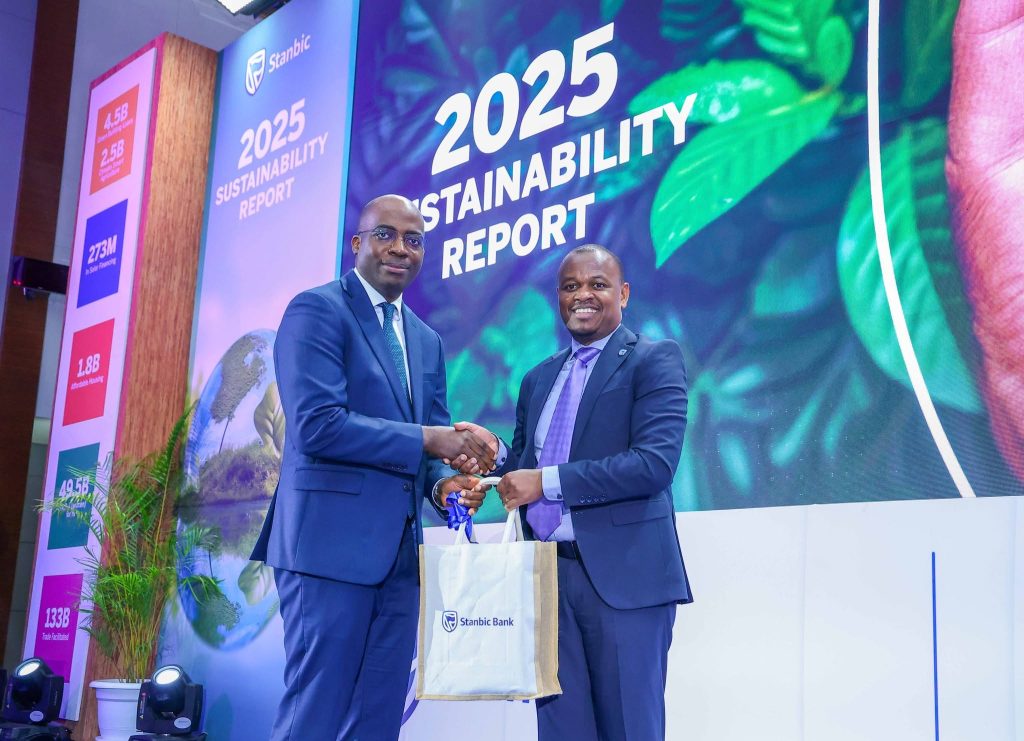 The funding supported home ownership in the country and reinforced the role of financial institutions in expanding access to quality, affordable housing
Stanbic increased the share of procurement spend directed to women-owned businesses to 15.53%, reflecting its continued focus on inclusive supply chains and expanding economic opportunities for women-led enterprises.


 Edwin Mucai,Chief Risk Officer, said: “Our Environmental and Social Risk Management framework, which mandates screening for all loans above USD1 million, strengthens the quality and resilience of our loan portfolio.
 It protects the Bank and its clients from financing projects with material environmental and social vulnerabilities, helping us build a more resilient book that can withstand economic shocks.”
The Bank also disbursed KES2.5 billion for climate-smart agriculture, raising its agricultural loan book to 9.9%. In addition, it planted 204,000 trees and restored over 107 hectares of degraded land, including indigenous tree restoration in Mt. Kenya and mangrove restoration at the Sabaki Estuary.
 Priscilla Were, Head of Sustainability, said: “To deliver on our strategy and advance our purpose, we are focused on tackling critical challenges in Kenya and South Sudan while contributing to greater prosperity for our people.
Through our sustainability agenda, we are able to generate strong financial returns for our shareholders and create meaningful social, economic and environmental value for the communities we serve.
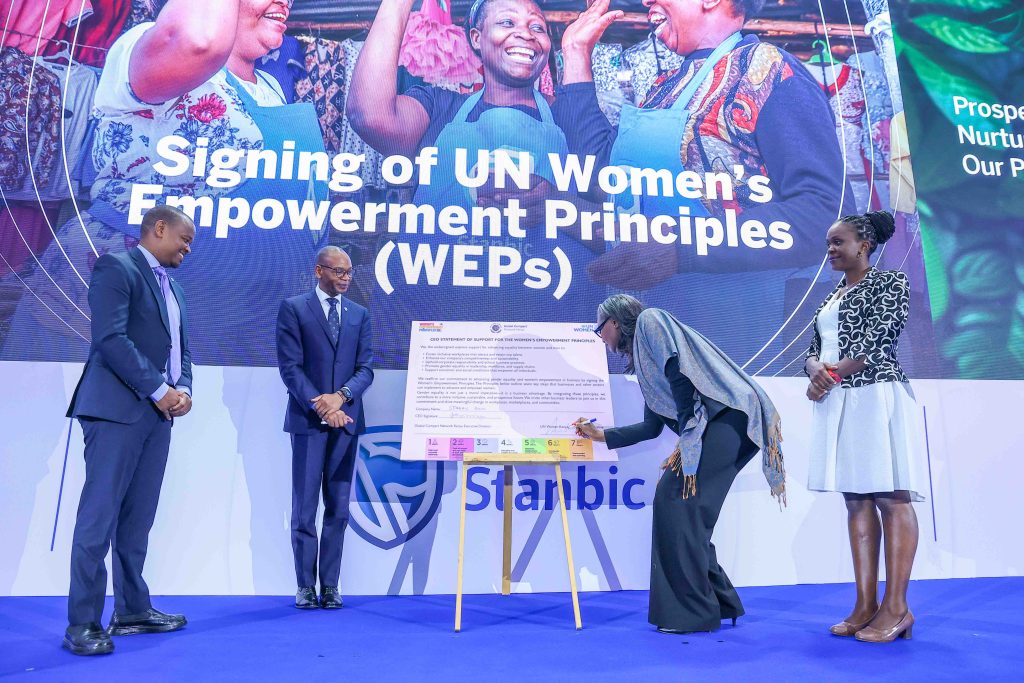
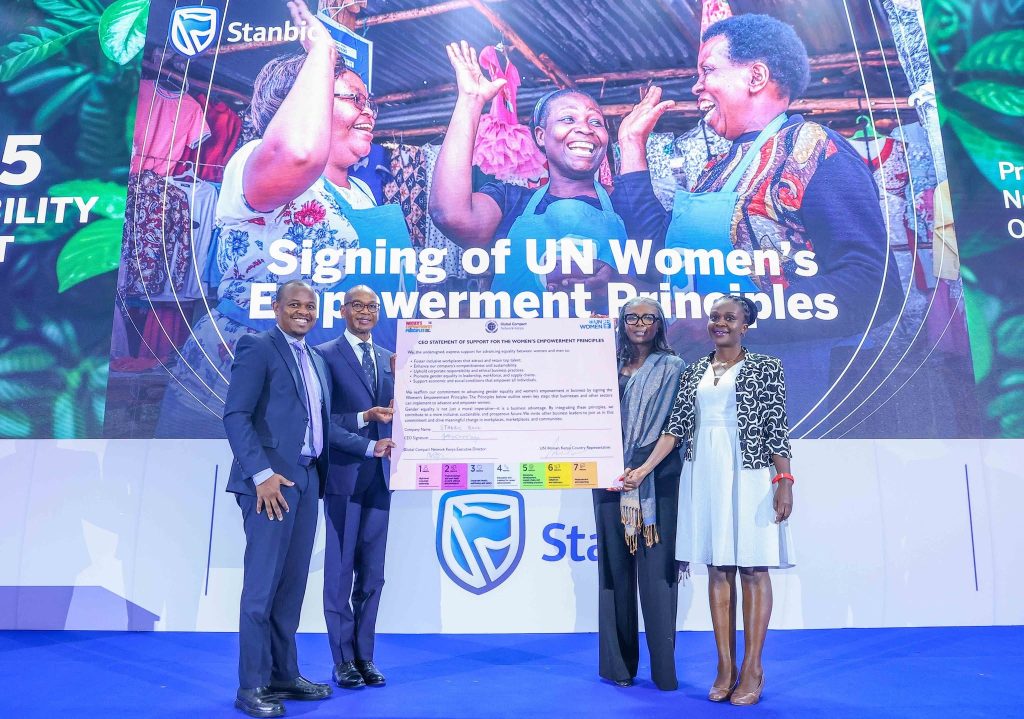
During the launch event, the Bank signed onto the UN Women’s Empowerment Principles, adopting 7 principles:
Principle 1–High-level Corporate Leadership;
Principle 2 –Treat all Women and Men Fairly at Work without Discrimination;
Principle 3 – Ensure the health, safety and well-being of all women and men workers;
Principle 4 – Promote education, training and professional development for women;
Principle 5 – Enterprise Development, Supply Chain and Marketing Practices;
Principle 6 – Community Initiatives and Advocacy;
Principle 7- Measurement and Reporting;
 This builds on Stanbic’s continued investment in women and women-owned enterprises, with KES49.5 billion disbursed to women entrepreneurs through the D.A.D.A platform since inception and 112,640 women onboarded.
 The Bank also continued to drive positive impact through the Stanbic Foundation, with KES105.73 million disbursed in targeted support to MSMEs and 100,000 youth across eight counties equipped with digital skills.
 The Bank has also introduced a Sustainability Academy: a comprehensive learning platform designed to bridge the sustainability knowledge gap and empower business clients across the continent with practical sustainability and Environmental, Social, and Governance (ESG) solutions.
 The academy offers businesses practical insights and training across key sustainability areas, including:
- Sustainability and ESG principles
- Renewable energy options across industries
- Cost and production benefits of Climate-smart agriculture
- Water and wastewater management solutions
- Carbon markets