
 Aiden k
CS Sen.Mutahi Kagwe
- Quality-Based Milk Payment:The Future of Kenya’s Dairy Industry
Kenya’s dairy industry is at a defining moment. As Africa’s leading milk producer, with an annual production of approximately 5.4 billion litres, the country’s next milestone is not simply producing more milk, but producing better quality milk.
This shift will see farmers increasingly rewarded based on the quality of milk they deliver rather than just the quantity.
 Quality Based Milk Payment (QBMP) is set to transform the dairy value chain by encouraging farmers to adopt better dairy management practices.
Farmers who invest in proper animal nutrition, clean water, disease control, regular veterinary care, hygienic milking practices and proper milk handling will be better positioned to earn higher returns.
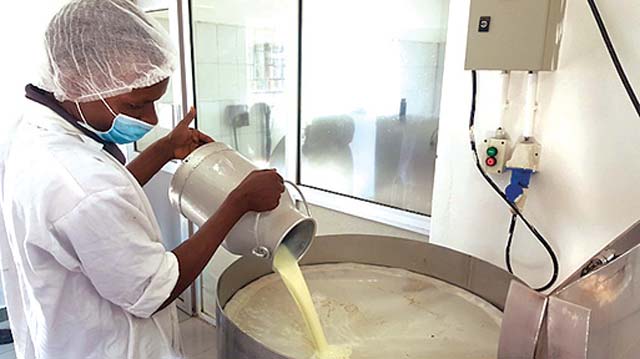
Milk with lower bacterial counts, free from adulteration and antibiotic residues, and with higher butterfat and protein content commands greater value in both local and international markets.

The Government of Kenya (GoK) is positioning the dairy sector for this transition through strategic investments aimed at improving milk quality and reducing post-harvest losses.
During the handover of milk coolers to Mukurweini Wakulima Dairy Farmers Limited, CS Sen. Mutahi Kagwe reaffirmed the Government’s commitment to empowering dairy farmers through modern infrastructure that preserves milk quality from the farm to the processor.

 The CS emphasized that Kenya’s dairy sector must now move beyond selling raw milk to embracing value addition. Producing milk powder, cheese, butter, yoghurt and other processed dairy products will enable Kenya to penetrate export markets, create more jobs, reduce losses during periods of surplus production and increase farmers’ incomes.
Milk powder, in particular, offers an opportunity to preserve excess milk and access regional and international markets throughout the year.
 Central to achieving this vision is the strengthening of cooperative societies.Strong cooperatives provide farmers with better bargaining power, lower production costs through economies of scale, easier access to financing, extension services, quality assurance systems and export opportunities.
 They also become effective channels through which government support reaches farmers.
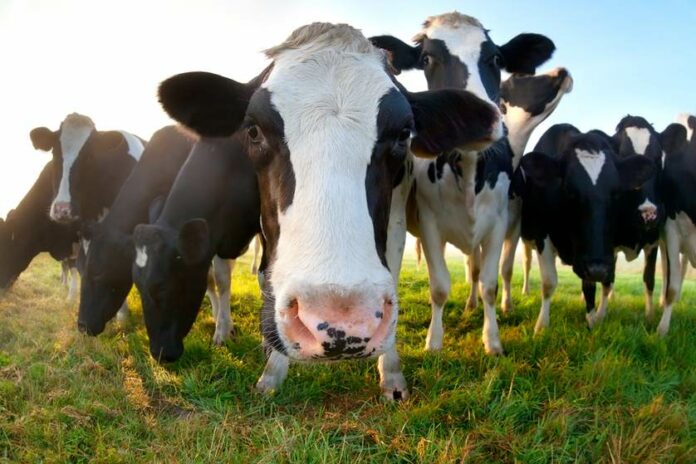
To further improve dairy productivity, the CS announced the provision of 500 doses of sexed semen through the Kenya Dairy Board(KDB),enabling farmers to achieve up to a 90 percent probability of producing calves of the desired gender, thereby accelerating herd improvement and increasing milk production efficiency.
 Beyond dairy,the Government continues to promote diversified agricultural growth.Farmers were given 70,000 coffee seedlings, to be issued only to those who have adequately prepared planting holes, alongside 70,000 avocado seedlings and 50,000 macadamia seedlings, demonstrating a broader commitment to improving agricultural productivity and farmer incomes.
The message to Kenyan dairy farmers is clear: the future belongs to those who produce quality.
As quality-based milk payment becomes the new standard, farmers who embrace best dairy practices, invest in herd management and work together through strong cooperatives will be best positioned to benefit from higher earnings, expanded market access and the growing opportunities in value-added dairy products.
 Quality is no longer just a production standard, it is becoming the currency of Kenya’s dairy industry.
Views: 17