2nd GTI Forum on Digital Intelligence Convenes in Hong Kong Forging Global Consensus to Advance Inclusive AI Development
 Media OutReach Newswire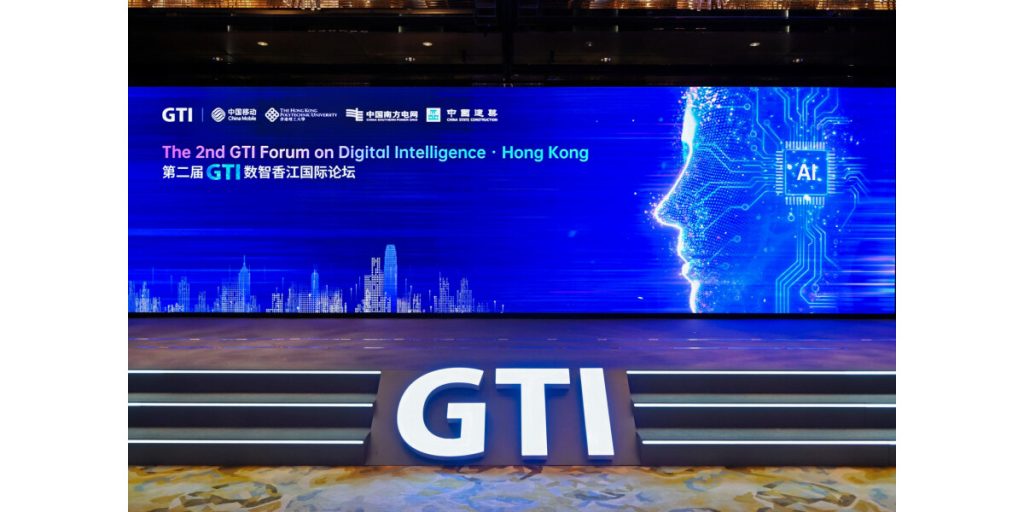
HONG KONG SAR – Media OutReach Newswire – 12 September 2025 – The 2nd GTI Forum on Digital Intelligence was held in Hong Kong under the theme “Openness, Sharing, Cooperation: Advancing Al Development”. The event brought together Li Zhen, Vice Chairman of the State-owned Assets Supervision and Administration Commission of the State Council (SASAC); Sun Dong, Secretary for Innovation, Technology and Industry of the Hong Kong Special Administrative Region Government; Zhao Houlin, Former Secretary-General of the International Telecommunication Union (ITU) and Honorary Chairman of the GTI Advisory Committee; Gim Huay Neo, Managing Director and Chair of Greater China at the World Economic Forum; Gao Tongqing, Chairman of GTI; Li Huidi, Vice President of China Mobile; Mark Nitzberg, Executive Director Center for Human-Compatible AI at UC Berkeley AI Research Lab; and Yannis Ioannidis, President of Association for Computing Machinery (ACM). The forum also welcomed representatives from ITU, GSMA, and other international organizations, scholars from leading universities and research institutions worldwide, as well as executives from more than 100 enterprises.

2nd GTI Forum on Digital Intelligence Convenes in Hong Kong Forging Global Consensus to Advance Inclusive AI Development
In his address, Sun Dong, Secretary for Innovation, Technology and Industry of the Hong Kong Special Administrative Region Government, highlighted Hong Kong’s full commitment to advancing technological innovation, actively integrating into the national development agenda, and establishing itself as an international innovation hub through policy support, infrastructure development, and international collaboration. He underscored AI as a vital engine for high-quality economic development, expressing Hong Kong’s commitment to joining hands with global partners to drive inclusive AI development. He highlighted Hong Kong’s ambition to serve as a frontier for AI research, technology transfer, and talent, contributing to both China’s AI strategy and global AI progress.
GTI Chairman Gao Tongqing stressed that GTI is deepening global cooperation, uniting consensus, and advancing the vision of “network-intelligence integration for inclusive AI.” GTI has launched the “5G-A×AI Integration Development Project” to identify landmark AI applications and innovations. To contribute to global development, the Mobile Intelligence Integration Index (MI³) has been introduced as a benchmark for advancing network-intelligence convergence. The index is designed to help stakeholders adapt to local conditions, leverage complementary strengths, and implement targeted measures to bridge the digital-intelligence divide. Gao further observed that over the past year, AI development has demonstrated three defining trends: the generalization of models, the customization of applications, and the embodiment of intelligence. Looking ahead, he put forward three proposals on behalf of GTI:
1. Jointly drive technological innovation to solidify intelligent foundations. Bring together global industry, academia, research, and application stakeholders; leverage the complementary strengths of East and West; and use GTI’s platform to address shared challenges.
2. Share open scenarios to empower diverse industries. Build and operate 5G-A×AI/6G open laboratories, actively open high-value industry scenarios, and co-develop replicable AI benchmark projects.
2. Share open scenarios to empower diverse industries. Build and operate 5G-A×AI/6G open laboratories, actively open high-value industry scenarios, and co-develop replicable AI benchmark projects.
3. Establish dialogue platforms to advance AI for good. Foster constructive dialogue, leverage outcomes such as the MI3 Index, and explore common ground on AI standards, safety, and governance to promote human well-being.
Li Huidi, Executive Vice President of China Mobile, remarked that as a founding member of GTI, China Mobile has consistently upheld the principles of “openness, sharing, cooperation, and mutual benefit,” contributing to the prosperity of the global ICT industry. In recent years, China Mobile has positioned itself as a provider, integrator, and a facilitator in the field of AI. Through its AI action plan, China Mobile is driving faster innovation, and wider application of digital technologies, contributing its strength to sustainable high quality economic and social development. He outlined China Mobile’s strategy of advancing “AI for Life”, “AI for Production” and “AI for Governance”. To shape the AI+ era, Li proposed three initiatives to ensure AI is safe, fair, and beneficial:
1. Build world-class hubs for AI innovation. This calls for deeper partnerships among research institutes and industry, and stronger research into AI fundamentals, including mathematics, autonomous collaboration, and intelligent decision-making. At the same time, frontier fields such as spatial intelligence, embodied AI, and world models should be actively explored, while 6G–AI integration is advanced. The objective is to establish an original technology system capable of supporting AGI (Artificial General Intelligence) and ASI (Artificial Super Intelligence) in the future.
2. Accelerate AI adoption in real-world scenarios. This requires progress at every stage, from idea generation and design, to resource sharing and pilot demonstrations. With foresight and innovative practice, faster adoption of AI can be achieved in areas such as smart energy, intelligent construction, digital finance, and smart cities.
3. Harness AI for a better world. Guided by a human-centered approach, diversity of languages, cultures, and regions should be respected at every stage, from data collection and algorithm design to product application, ensuring that AI contributes to social equity and human well-being.
At the forum, China Mobile, together with GTI and the Zhongguancun Institute of Ubiquitous-X Innovation and Application, unveiled the “AI-Native 6G Open Testbed Hong Kong Node” and the achievements of Beijing-Hong Kong 6G interconnection trials. The Hong Kong and Beijing nodes will jointly serve as an international open 6G cooperation platform under GTI, supported by over 20 institutions including the University of Hong Kong, the Hong Kong Polytechnic University, the Hong Kong University of Science and Technology, and the University of Malaya. The Hong Kong node will help establish the city as a demonstration base for 6G innovation and industrialization, while facilitating broader international collaboration and knowledge exchange.
China Mobile and GTI also joined hands with more than 20 central enterprises, leading ICT companies, and renowned scholars from the US, Europe, and Asia to launch the “Global “AI+” Industry-Academia-Research Ecosystem Cooperation Initiative”. The initiative calls for:
1. Joint Technology Innovation. Focusing on cutting-edge AI technologies, network and AI integration, etc. industry–academia–research collaborative innovation will be advanced to accelerate the continuous progress of “AI+” technology.
2. Use Case Creation and Validation. Replicable and scalable industry application templates will be developed to strengthen “AI+” technology integration and scenario deployment capabilities.
3. Achievement Sharing. The “GTI 5G-A×AI 100 Commercial Campaign” will be launched to boost cross-regional sharing of products and solutions, ensuring that the benefits of “AI+” development are broadly accessible.
4. Ecosystem Co-building. With the support of international platforms such as GTI, global innovation networks will be expanded and regular exchanges and cooperation fostered, building an open “AI+” ecosystem founded on fairness, mutual trust, and win–win collaboration.
Mark Nitzberg, Executive Director Center for Human-Compatible AI at UC Berkeley AI Research Lab, Yannis Ioannidis, President of ACM and other global experts shared insights on AI development trends and cutting-edge technologies.
Additional keynote speakers and panelists included Zhao Houlin, Gim Huay Neo, Alexander Ntoko, Chief of Operation and Planning Department of TSB at ITU; Laurent Audoly, Professor at Northeastern University; Etienne Chaponniere, Vice President of Qualcomm; and Feng Junlan, Chief Scientist of China Mobile. Executives and experts from China Southern Power Grid, China State Construction, AMD, Intel, Siemens, Nokia, the University of Malaya, and Deloitte. They engaged in discussions on AI’s global role, innovation progress, and solutions, aiming to advance AI from theory to practice.
The forum also featured three sub-forums—”Intelligent Construction,” “Smart Energy,” and “Convergence of Networks and Al.” More than 20 distinguished academicians and industry leaders from construction, energy, telecommunications, and AI shared insights into AI applications across diverse sectors, driving the deep integration of “AI+” with economic and social development and empowering industries worldwide.
Hashtag: #GTI #ChinaMobile #AI #Connectivity
 https://www.cmi.chinamobile.com/en/
The issuer is solely responsible for the content of this announcement.
China Mobile International
China Mobile International Limited (CMI) is a wholly owned subsidiary of China Mobile. In order to provide high quality services to meet the growing demand in the international market, China Mobile established CMI in December 2010, headquartered in Hong Kong, China. CMI has expanded its footprint in 39 countries and regions. Leveraging the strong support by China Mobile, CMI is a trusted partner that provides comprehensive international information services and solutions to enterprises, carriers and mobile users. please visit www.cmi.chinamobile.com

Views: 54