 Business Desk
Mr.Justus Wabuyabo, Chief Executive Officer of Nuclear Power and Energy Agency (NuPEA)
- Powering Kenya’s Next Energy Frontier:
- How NUPEA is Preparing the Nation for the Nuclear Age;
As Kenya accelerates its journey toward becoming a globally competitive industrial economy, one question continues to shape conversations around the country’s future:where will the reliable, affordable and sustainable energy required to power that transformation come from?
 While geothermal, hydro, wind and solar energy have positioned Kenya as one of Africa’s leaders in renewable energy, the country’s long-term ambitions demand a more resilient and dependable source of base-load power.
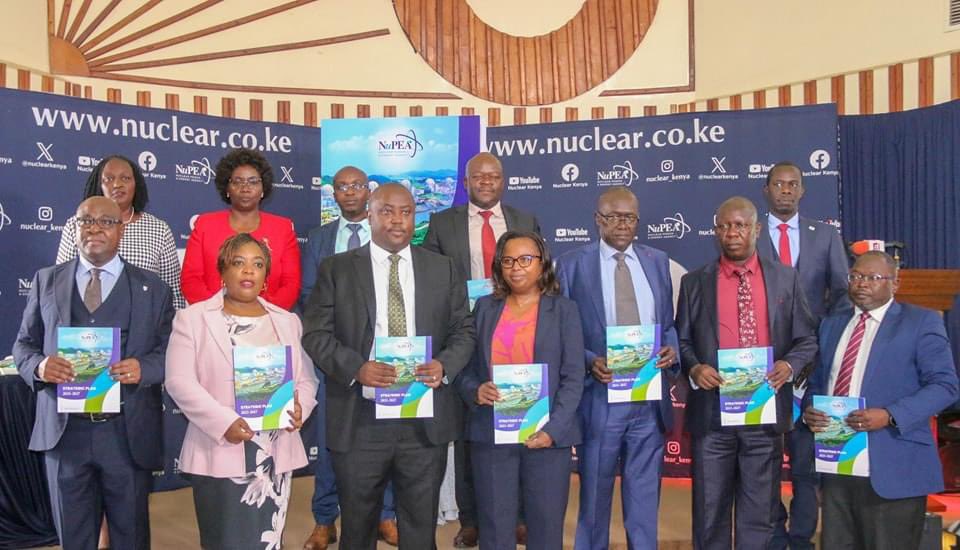 At the centre of this conversation is the Nuclear Power and Energy Agency (NUPEA), the state corporation mandated to spearhead Kenya’s nuclear energy programme coordinating nuclear energy development,research,innovation, while coordinating research, development and capacity building across the country’s energy and petroleum sectors.
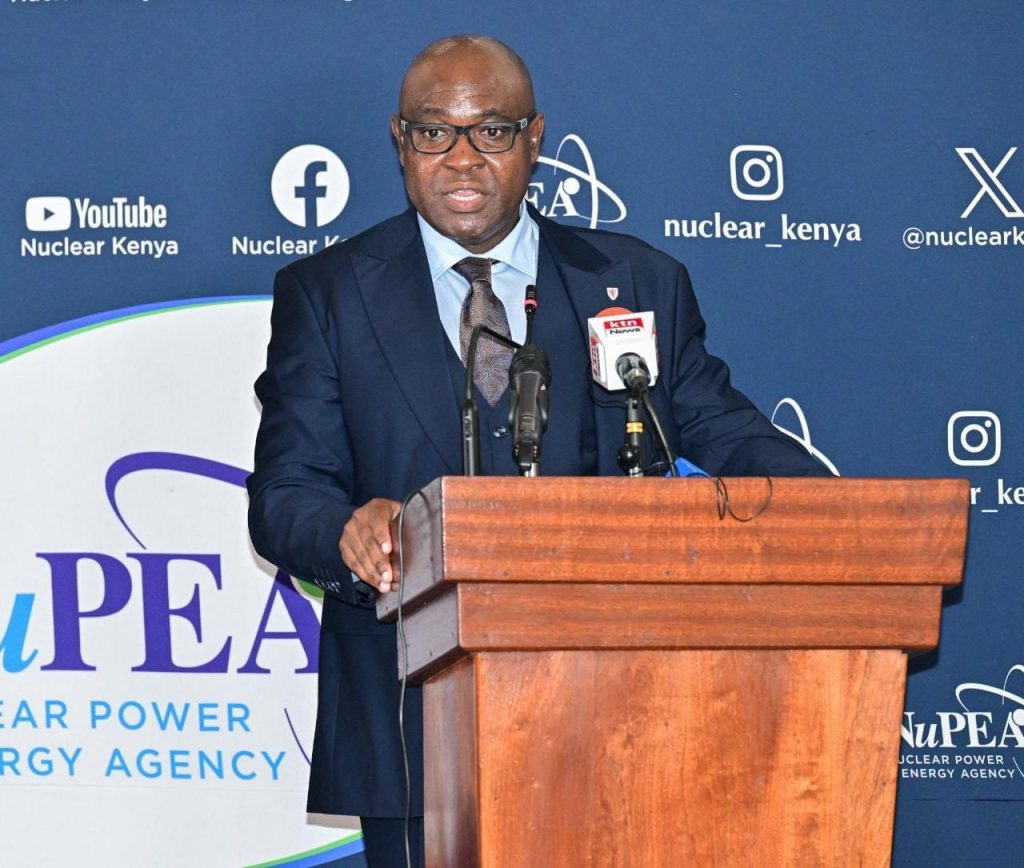
Leading this ambitious agenda is Mr.Justus Wabuyabo, Chief Executive Officer of Nuclear Power and Energy Agency (NuPEA),whose vision extends beyond constructing Kenya’s first nuclear power plant.
For him, the programme represents a transformational national project capable of redefining industrial growth, technological advancement, job creation and energy security for generations.
“Nuclear guarantees the country energy sovereignty and energy security,” says Wabuyabo.
“It will provide the dependable baseload power required to support our industrialisation agenda, power industries, homes, schools and hospitals, and ultimately improve the quality of life for Kenyans.”

Building on a Strong Foundation
NUPEA traces its origins to 2010 when it was established as the Kenya Nuclear Electricity Board (KNEB) during the administration of former President Mwai Kibaki.
The institution was created to prepare Kenya for the eventual deployment of nuclear power as part of the country’s long-term energy mix.

Following the enactment of the Energy Act, the organisation evolved into the Nuclear Power and Energy Agency(NuPEA) with an expanded mandate that now includes coordinating nuclear energy development,research and innovation, as well as capacity building for the wider energy and petroleum sectors.
Since its inception, Kenya’s nuclear programme has followed the internationally recognised milestone approach developed by the International Atomic Energy Agency (IAEA), the global authority responsible for promoting the peaceful use of nuclear technology while ensuring safety,security and non-proliferation.

The country successfully completed the first milestone, the national decision to include nuclear power in its future energy mix, and is now advancing through the second phase, which focuses on creating the legal,institutional,technical and human resource frameworks necessary before construction begins.
 Among the milestones already achieved is the establishment of the Kenyan Nuclear Regulatory Authority(KNRA),providing Kenya with an independent regulatory institution responsible for ensuring the safe and secure use of nuclear technology.
“Kenya is a responsible global citizen,” Wabuyabo explains.
“We are committed to ensuring that every step we take follows internationally accepted standards and guidelines established by the International Atomic Energy Agency.”
Kenya currently generates more than 90 percent of its electricity from renewable sources, with geothermal providing the country’s principal baseload, complemented by hydroelectricity,wind and solar generation.
Yet, according to NuPEA, renewable energy alone may not be sufficient to meet the country’s future electricity demand.
As Kenya pursues the aspirations of Vision 2030 and the Bottom-Up Economic Transformation Agenda (BETA), electricity demand is projected to increase dramatically as manufacturing expands, urbanisation accelerates and new industries emerge.
“When we project the country’s future energy requirements, we estimate that Kenya will eventually require nearly 60 gigawatts of electricity,” says Wabuyabo.
“Our geothermal potential, while significant,is estimated at around 10,000 megawatts.That creates a compelling case for nuclear power as part of our future energy mix.”
Unlike intermittent renewable sources that depend on weather conditions, nuclear power plants operate continuously, providing stable electricity around the clock regardless of sunshine or wind conditions.
For an industrial economy, this consistency is invaluable.

“That means more manufacturing,greater value addition, more exports and ultimately more jobs for our people.“
Kenya’s First Nuclear Power Plant
Subject to completion of all regulatory, technical and international requirements, groundbreaking is expected in 2027, with commercial electricity generation targeted for 2034.
 The project represents one of the largest infrastructure investments in Kenya’s history.
Construction alone is expected to span between five and seven years while stimulating significant activity across multiple sectors of the economy.
“During construction, we anticipate creating approximately 20,000 direct jobs,” Wabuyabo reveals.
These opportunities will extend far beyond nuclear scientists and engineers.
The project will require civil engineers, architects, electricians, welders,machine operators,plumbers,safety specialists, environmental experts, lawyers, communication professionals, finance experts, project managers and thousands of skilled artisans.
 NuPEA is equally determined to ensure that Kenyans occupy the majority of these positions.
“Any job that can be performed by a Kenyan must be done by a Kenyan,” Wabuyabo says.
“Where specialised international expertise is required, every foreign expert will have a Kenyan understudy to facilitate technology transfer.”*
Investing in Kenyan Talent
Perhaps one of NuPEA’s most strategic initiatives has been its deliberate investment in human capital.
 As the programme enters a more advanced stage, NuPEA is shifting its focus towards strengthening domestic training institutions.
The Agency is collaborating with Masinde Muliro University of Science and Technology (MMUST) and Jaramogi Oginga Odinga University of Science and Technology(JOOUST) to develop specialised academic programmes aligned with the country’s future nuclear workforce requirements.
 Recognising that nuclear projects depend on a broad range of technical skills, NuPEA is also partnering with Technical and Vocational Education and Training (TVET) institutions and polytechnics to prepare artisans and technicians.
“We are not trying to reinvent the wheel,” Wabuyabo explains.
“We want to identify existing talent and equip them with the specialised skills needed to participate in Kenya’s nuclear programme.”
This approach ensures that local communities surrounding the project site will also benefit from employment and skills development opportunities.
Beyond Electricity
Although electricity generation often dominates public discussion, NuPEA emphasises that nuclear science has applications extending far beyond power production.
Today, nuclear technology contributes significantly to healthcare through advanced cancer diagnosis and treatment, medical imaging and radiotherapy.
In agriculture, nuclear techniques support the development of drought-resistant and disease-resistant crop varieties while improving food preservation through irradiation technologies.

Recognising these diverse applications,Kenya is developing a comprehensive national nuclear policy that will provide governance across all peaceful uses of nuclear technology.
“Nuclear technology is much broader than electricity generation,” Mr.Wabuyabo says.
“Its benefits cut across agriculture, medicine, public health, industry and scientific research.”
Despite decades of successful nuclear energy deployment across many developed economies, misconceptions about nuclear technology persist.

The Agency continues to engage communities, policymakers, civil society organisations and educational institutions to promote informed dialogue on nuclear technology.
“There are many myths surrounding nuclear energy,” Wabuyabo observes.
“Our role is to educate the public about the peaceful uses of nuclear technology and demonstrate how it has improved lives across the world.”
For communities hosting nuclear facilities, the benefits frequently extend beyond electricity generation.
Improved road networks, healthcare facilities, schools, housing developments and expanded local businesses often accompany major nuclear infrastructure projects.
“Communities that host nuclear plants often experience significant socio-economic transformation,” Wabuyabo says.
“That is the kind of development we want Kenyans to appreciate.”
Kenya’s nuclear ambitions are being strengthened through strategic international partnerships.
These partnerships are expected to facilitate technology transfer, training, research collaboration and investment while exposing Kenyan professionals to global best practices.
 “We are not simply interested in importing a nuclear power plant,” Wabuyabo emphasises.
“Our objective is to build local capacity so that, over time,Kenya develops its own expertise and becomes increasingly self-reliant.”
For NuPEA, the nuclear programme represents far more than another energy project.
 It is envisioned as a catalyst capable of accelerating industrialisation, strengthening national competitiveness, attracting foreign direct investment and positioning Kenya as a regional leader in advanced technology.
Reliable electricity remains one of the most important determinants of industrial productivity,investment attractiveness and economic resilience.

*”We believe nuclear is part of Kenya’s future,” Wabuyabo concludes.
“It is about creating affordable energy, building local expertise, generating employment, attracting investment and ultimately securing a better future for our country.
We are laying the foundation today so that future generations inherit an energy system capable of supporting Kenya’s long-term development aspirations.”
As the country steadily advances towards the next milestone in its nuclear journey,NuPEA is positioning itself not merely as an energy agency,but as an institution helping shape one of Kenya’s most significant economic transformations, one powered by innovation, global partnerships and a commitment to sustainable development.
Views: 52