Douglas Mwiti
Knight Frank:African Best-in Class Offices Outperform with 30-40pc;
· In Gaborone, prime CBD offices are operating at approximately 98% occupancy, while ESG-certified assets are achieving 30–40% rental premiums.
· In Dar es Salaam, occupancy has strengthened to 80%, up from 76% in H1 2025, with rents stable at US$15 per sqm.
· In Nairobi, prime occupancy improved from 77.7% to 80.3%, despite rents remaining stable at US$13 per sqm.
Africa’s prime office sector is entering a new cycle defined by quality differentiation, and ESG alignment, according to the global property consultant Knight Frank’s Africa Offices Market Dashboard (H2 2025),
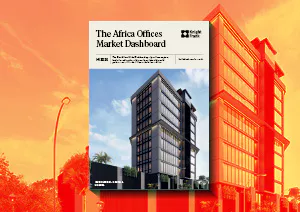 The report, which tracks prime office performance across major African cities, finds that Grade A and ESG-compliant buildings are materially outperforming secondary stock, commanding rental premiums of between 30% and 40% in select markets, while sustaining higher occupancies and stronger investor appetite.
Boniface Abudho, Research Analyst at Knight Frank Africa, explains, “A dominant thematic trend across African office markets is the clear outperformance of Grade A and ESG-certified assets. Buildings incorporating solar power, borehole water systems, fibre connectivity, and resilient backup power are increasingly viewed as operational necessities rather than premium add-ons.”
 The Knight Frank report reveals a growing segmentation between prime and non-prime office stock. For instance, in South Africa, overall vacancy has declined from 16% in H2 2024 to 14%, driven by improved absorption in high-quality buildings. Meanwhile, B- and C-grade assets face rising obsolescence unless repositioned.
While in Zimbabwe, newly developed Grade A owner-occupied buildings by major financial institutions demonstrate improving asset quality, CBD vacancy remains high at approximately 60% in Harare, compared to 40% in Bulawayo. Nevertheless, suburban Harare offices outperform, achieving monthly rents of US$10–12 per sqm and yields near 9%, compared to US$5–8 per sqm in the CBD.
 Mark Dunford, CEO of Knight Frank Kenya, noted, “The second half of 2025 confirms a clear market revaluation of quality, with ESG credentials and flexibility becoming central to both leasing and investment decisions.
While secondary stock faces mounting pressure, prime, well-located, and sustainability-aligned buildings are demonstrating resilience, pricing power, and reduced vacancies.”
 According to Knight Frank, co-working models are also on the rise across different markets. For instance, in Egypt, co-working uptake is expanding rapidly among fintech firms, SMEs, NGOs, and corporates, with enterprise suites serving as swing space.
The report also highlights that across multiple markets, occupiers are shifting from congested CBDs to mixed-use and suburban nodes offering accessibility, parking, and integrated amenities.
· In Egypt, demand is concentrated in New Cairo, Sheikh Zayed, and the New Administrative Capital.
· In Zambia, decentralisation away from inner-city Lusaka is accelerating due to congestion and parking constraints.
· In Zimbabwe and Malawi, suburban nodes are outperforming traditional CBDs in both rent and yield metrics.