
 Paul Arithi
- New orders contract at solid pace amid rapid rise in costs in May;
Key findings Stanbic Bank, S&P Global PMI.
- Output and new sales fall at sharper rates
- Rate of total input price inflation steepest since
November 2023 - First decline in employment since the start of
2025
Kenyan firms recorded a further decline in business conditions during May, as contractions in activity and new sales gathered pace.
 Higher cost burdens placed strain on companies and their customers alike, with constrained budgets often noted as
weighing on demand conditions.
Driving the increase in total input prices was the sharpest uptick in purchase costs since November 2023.Output charges also rose and at the steepest pace in two-and-a-half years.
 Lower new orders also led to fresh contractions in employment and input buying.Nonetheless,business confidence in the year-ahead outlook improved.
The headline figure derived from the survey is the Purchasing Managers’ Index™ (PMI®).Readings above 50.0 signal an improvement in business conditions on the previous month, while readings below 50.0 show a deterioration.
 At 46.6 in May, the headline reading was down from 49.4 in April and signalled the quickest decline in the health of the Kenyan private sector since July 2024.
The solid downturn was partly driven by a notable acceleration in the pace of decline in business activity at Kenyan firms in May.
 The fall was marked overall, with panellists often attributing the contraction to lower new work intakes and weak demand.
In fact, new sales decreased at the fastest pace since mid-2025 as inflationary pressures led to greater customer hesitancy as clients tightened budgets midway through the second quarter.
At the sector level, construction and services firms recorded downturns in both output and new orders.Meanwhile,
manufacturing companies were alone in seeing growth in production as declines were recorded elsewhere.
Reduced pressure on capacity via a fall in new orders led firms to cut their workforce numbers for the first time in 16 months midway through the second quarter.
 The fall in employment largely regarded temporary staff where contracts were cut short.Companies reported sufficient capacity to process new work, as backlogs contracted for the third month running.
Output and new sales fall at sharper rates Rate of total input price inflation steepest since November 2023 First decline in employment
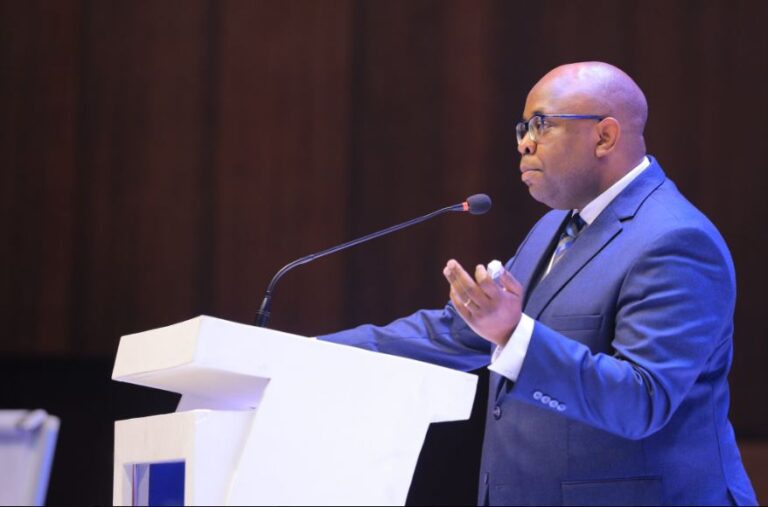 Christopher Legilisho, Economist at Standard Bank commented:
“The Stanbic Bank PMI data for May reflects a deterioration of business activity by private sector firms.
Inventory purchases slowed, from being expansive,because of weakening sales, cash flow concerns, and rising costs.
Consumer resistance to spend, alongside rising costs contributed to contractions in new orders and output.

These declines may stem from the week-long disruption to business activity because of nationwide protests by transportation sector players that constrained movement.
“Inflationary pressures have intensified, constraining demand conditions, with input prices, purchase costs and output prices driven up by higher fuel and transportation costs.
Still, despite subdued business momentum, firms remain optimistic about future conditions.”
 Budget constraints at companies also hampered input buying, which contracted for the first time in eight months.
Subsequently, firms eased efforts to stockpile inputs, as inventories were broadly unchanged on the month despite a further improvement in vendor performance.
On the price front, total cost burdens increased at a steeper rate in May.The acceleration in the pace of inflation brought it to the sharpest since November 2023, largely driven by a marked rise in purchase costs.
 Wage bills continued to increase, but at only a fractional pace.Although demand conditions became more challenging, Kenyan firms hiked their selling prices at a faster pace in May.
The rate of charge inflation was the quickest in two-and-a-half years and well above the series average.In fact, all five monitored sectors registered a rise in output prices.
 Kenyan firms were more confident in the outlook for output over the coming year in May.Optimism was reportedly underpinned by increased advertising, planned investment in product diversification and expanding online presence. Expectations for activity were the strongest since February 2023, with confidence broad based by sector.
Views: 40