Douglas Mwiti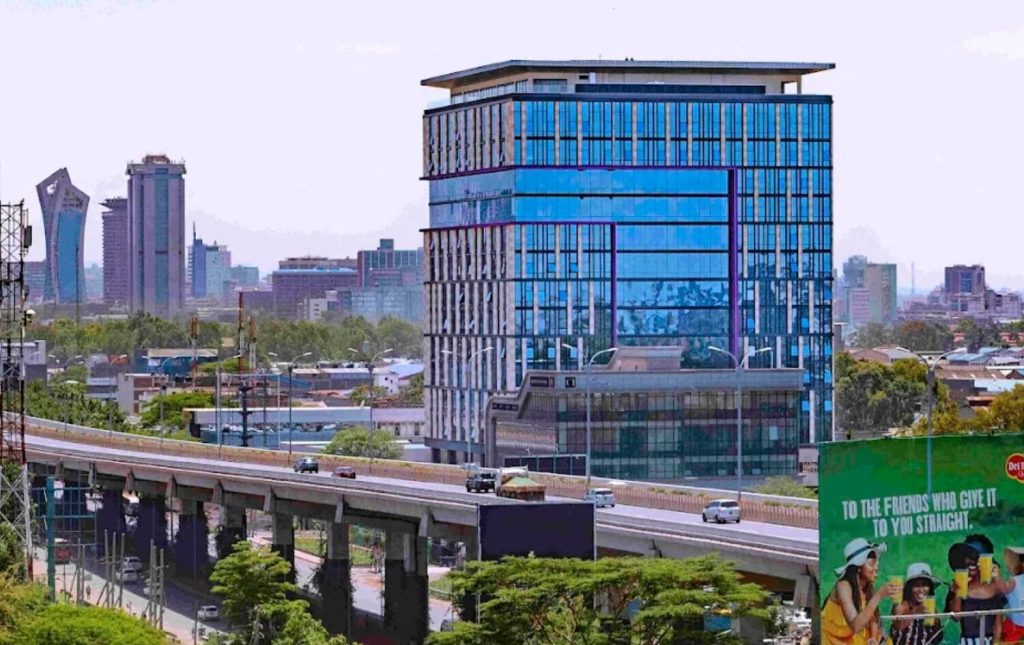
- Knight Frank Kenya Report Reveals Resilient Growth and Strategic Shifts in Real Estate Amidst Economic Stabilisation;
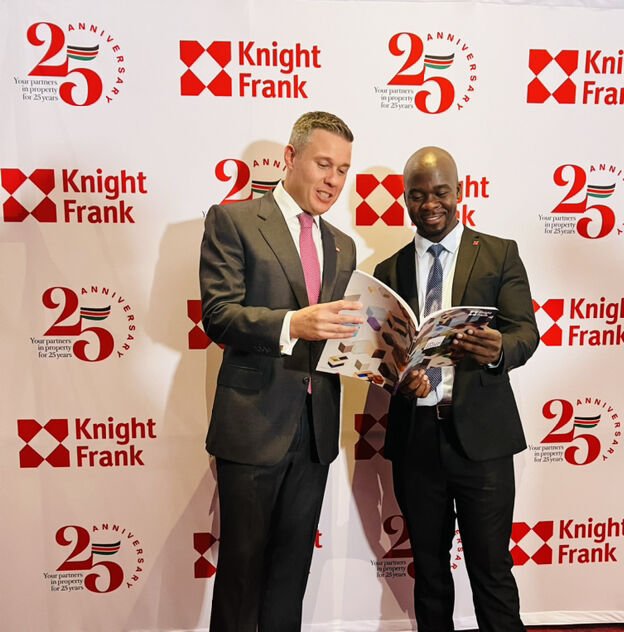
Knight Frank Kenya a leading global property consultancy, today released its Kenya Market Update H2 2025, providing a comprehensive analysis of the nation’s real estate landscape.
 The report highlights a year defined by resilience, strategic consolidation, and measured optimism, as the market navigates macroeconomic stabilisation and looks ahead to the 2027 general elections.
 MACROECONOMY & CONSTRUCTION ACTIVITY
Kenya’s economy is estimated to have grown by 4.9% in 2025, with a forecast of 4.9% in 2026, demonstrating steady momentum.
Key stabilisation factors included inflation remaining within the Central Bank of Kenya’s target band, a steady exchange rate, and a decline in lending rates.
 However, the real estate development sector signalled a strategic pause, with the value of approved building plans in Nairobi declining by approximately 24% year-on-year, as developers prioritised completing existing projects over new launches.
” The macroeconomic stabilisation in late 2025 has provided a firmer foundation for business planning.
However, the sharp decline in building approvals signals a market in consolidation mode. Developers and investors are strategically completing current inventories, indicating a mature response to both global and local uncertainties.”– Charles Macharia, Senior Research Analyst, Knight Frank Kenya

Infrastructure delivery in H2 2025 was increasingly shaped by Public-Private Partnerships (PPPs) and foreign capital, with flagship projects like the Nairobi-Nakuru-Mau Summit highway advancing under a USD 863 million PPP.
Policy clarity improved with court rulings strengthening investor rights and measures supporting urban densification, though a widening financing gap underscores the critical role of private capital in delivering Kenya’s infrastructure vision.
 OFFICE MARKET
Nairobi’s prime office occupancy rate rose significantly to 81.58% by December 2025, driven by strong uptake in Grade A completions like Purple Tower and The Mandrake.
Rents remained stable at USD 1.20 psf/month, with yields holding firm at 8-9% for prime assets.
The flexible workspace segment expanded but also saw consolidation, highlighting the importance of location and operational sustainability.
 “The flexible workspace sector embodies the market’s current complexity.While operator expansion into new formats and locations continues, the closure of non-core outlets is a vital market correction.
It underscores that success hinges not just on flexibility as a concept, but on strategic location, operational efficiency, and a compelling value proposition.” – Mark Dunford, CEO, Knight FrankKenya
 RETAIL MARKET
Major retailers like Naivas and Carrefour led a physical expansion drive, focusing on neighbourhood and community malls.
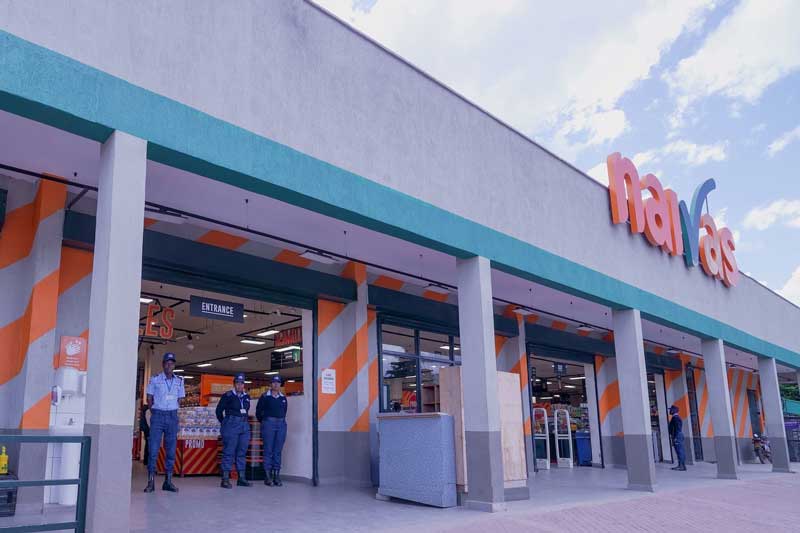 Despite digital disruption, physical retail footfall remained resilient. The pipeline is shifting toward mixed-use and community-focused developments, such as the proposed mall at Talanta Sports City, reflecting a strategic pivot to value-driven, convenience-based retailing.
 RESIDENTIAL MARKET
Prime residential price growth moderated to 6.17% in 2025, with a clear shift toward high-quality, integrated living.
Major launches in master-planned communities like Tatu City and Tilisi, alongside a rise in high-end apartment blocks in areas like Westlands, underscore changing buyer preferences towards security, amenities, and lifestyle.
 HOSPITALITY MARKET
International arrivals grew by 9.5% in the period, bolstered by several new and expanded international airlift.The sector saw landmark upgrades including the opening of the much-discussed Ritz Carlton Masai Mara and the operational Mombasa Commuter Rail, which boosted coastal occupancies above 85% in December.
 INDUSTRIAL MARKET
Special Economic Zones (SEZ), particularly Tatu City, emerged as focal points for industrial FDI, attracting over KES 65 billion in new commitments.
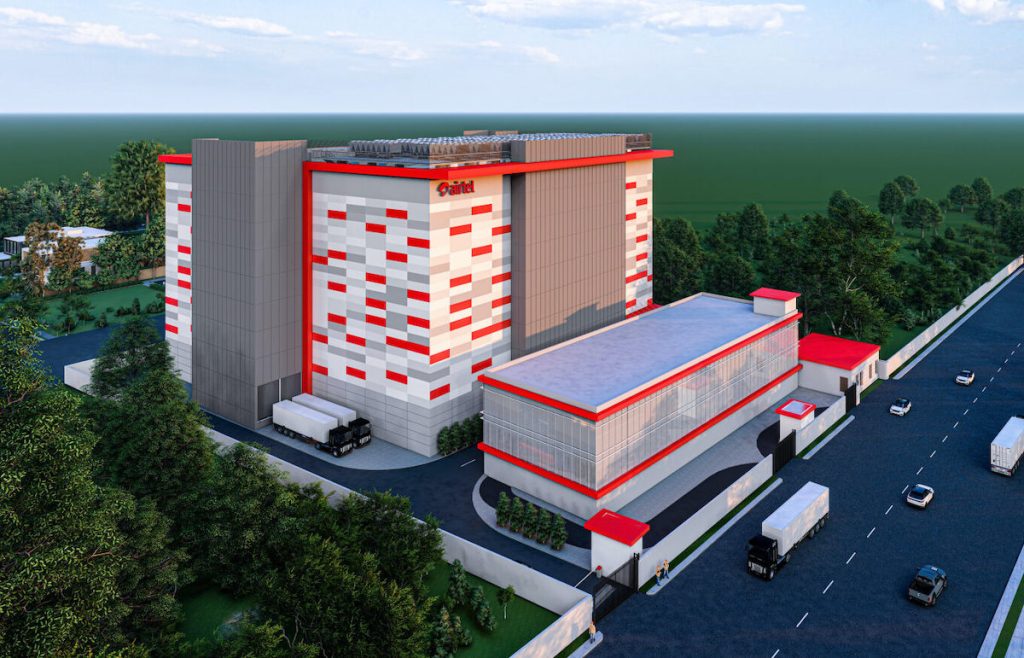
The alternatives sector shone with groundbreaking data centre projects, such as Airtel’s Nxtra facility, reinforcing Kenya’s status as East Africa’s digital hub.
 OUTLOOK FOR 2026
The real estate outlook for 2026 points to a year of absorption, completion, and cautious investment. While stable macro indicators support confidence, election-related uncertainty is likely to result in a ‘wait-and-see’ stance from many investors.
 Growth will be most pronounced in segments backed by targeted financing, such as affordable housing, and in resilient asset classes like prime office space and SEZs.
” 2026 will be a year for disciplined execution and strategic positioning.The markets rewarding quality, sustainability, and clear demand fundamentals will thrive, while those chasing speculative growth will pause.
 For savvy investors, the focus will be on prime assets, completed stock, and sectors where policy and capital alignment create real momentum.“–Mark Dunford, CEO, Knight Frank Kenya